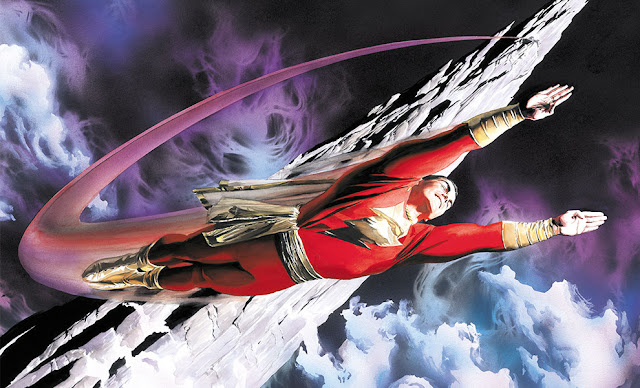
Capes on super heroes make no sense. They’re useless, unwieldy and nonfunctional. They’d interfere with a mission, causing the wearer to trip or get tangled up.
So why are they so popular? Because they’re a plaything for artists, shaped only by movement and the wind. A gift of glorious freedom. Compare how different artists make use of that freedom:
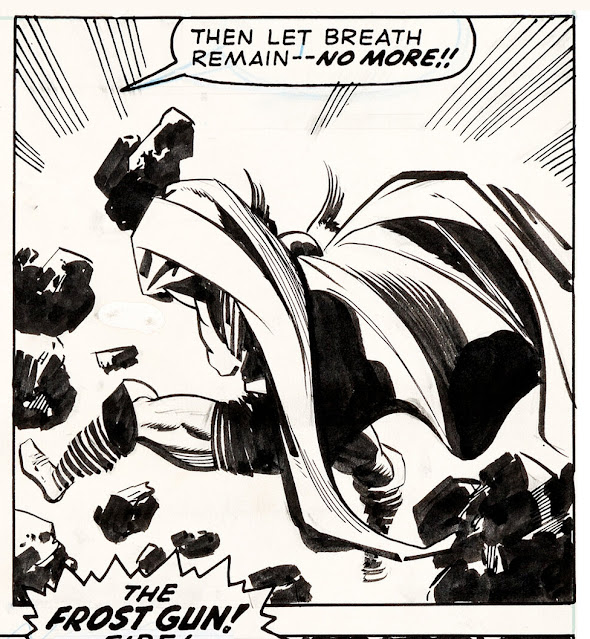
Jack Kirby invented big, muscular capes which accentuated his trademark big shoulders on his figures:
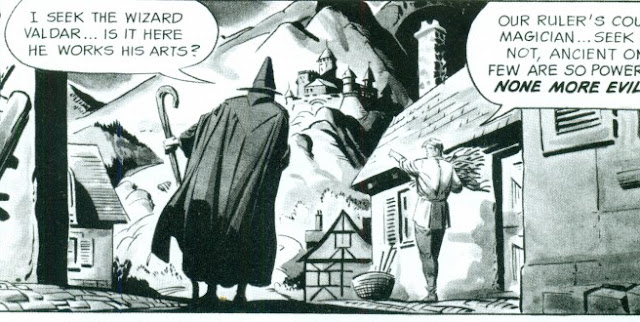
Steve Ditko, on the other hand reveled in long, flowing capes with heavy shadows.
 |
| Unlike Kirby’s brawny figures, Ditko’s willowy figures were part of his DNA. |

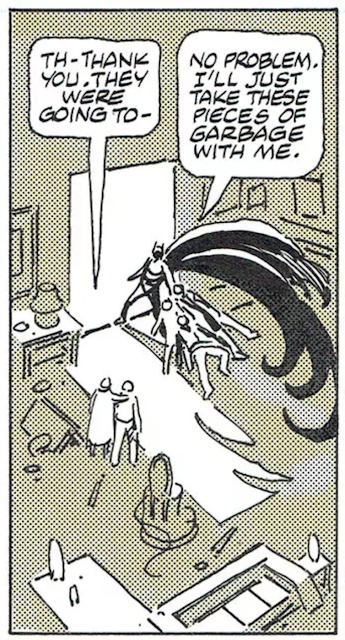
Neal Adams applied a lighter touch, drawing sleek, stylish capes that showed off his fine lines:
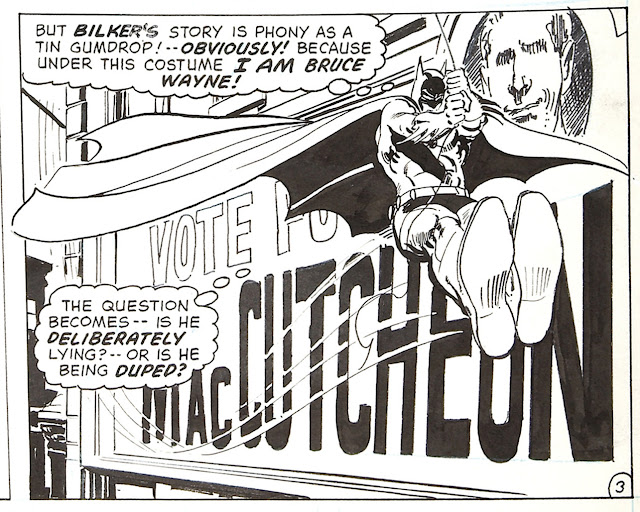
With all the rigors and disciplines of sequential comic art, capes are one of the few instances where the artist can kick back and invent whatever abstract shapes they want. As a result, they often exaggerate wildly, making capes bigger and longer than they could ever be in reality:
 |
| Joe Kubert takes liberties with capes (here and below) |
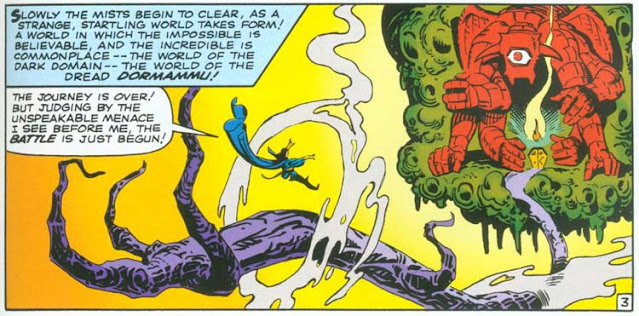 |
| Ditko too can’t resist drawing a cape out of all proportion |
If capes are a good test of the imagination and style of an artist, they also reveal the weakness of artists who have no opinions, or who are chained to photo reference. The cape below may be the most realistic cape of all the examples on this post, but also the most disappointing.