

How do you like this painting of an “intense gaze”?
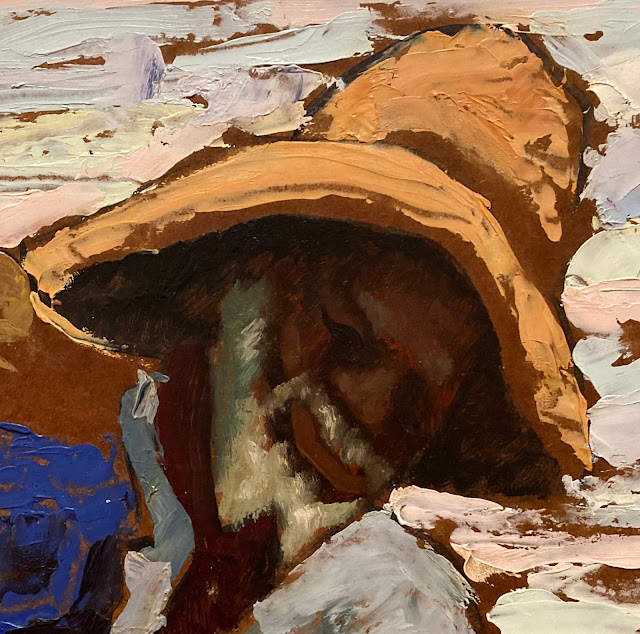
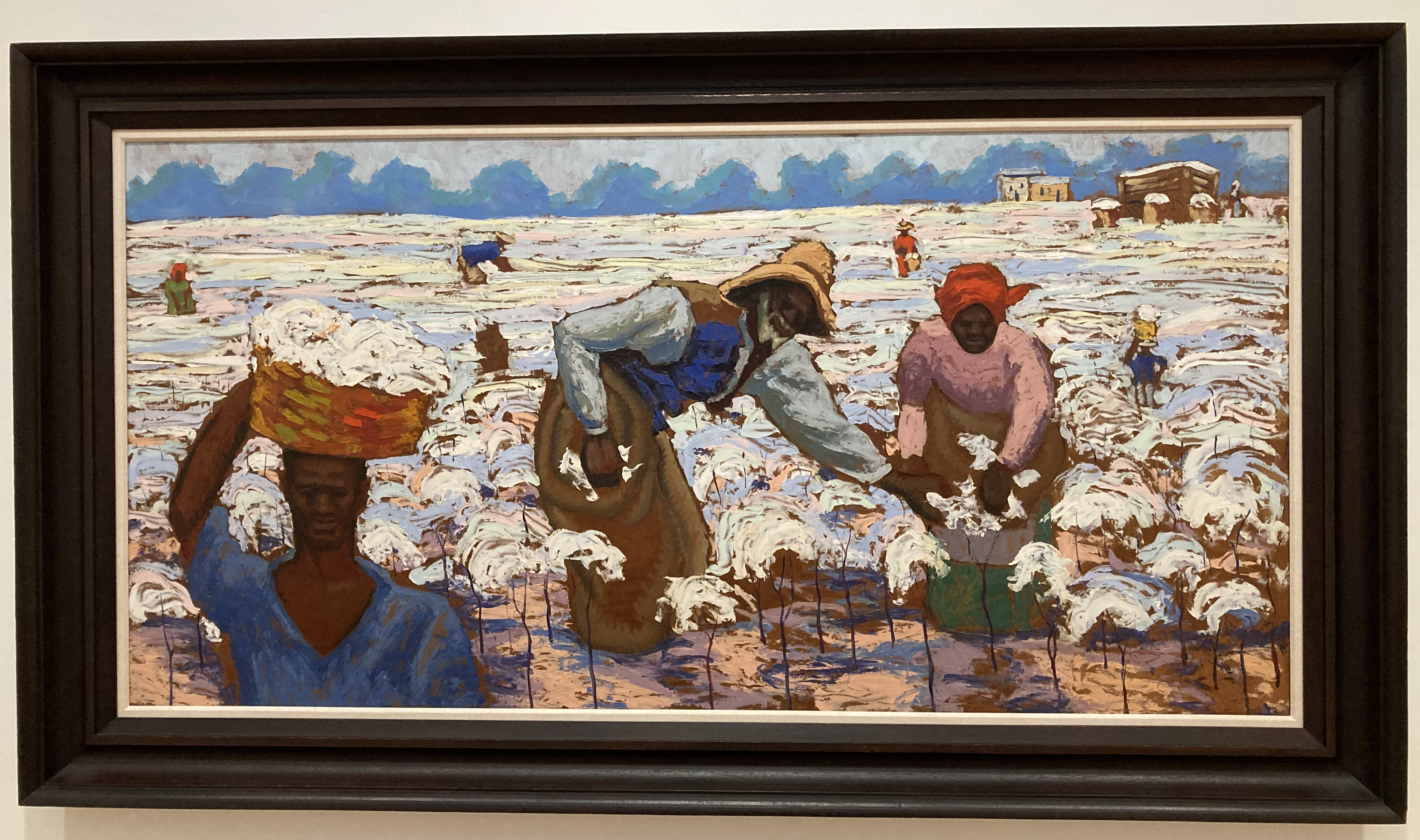
The wall placard describes the face of the central figure this way: “The intense gaze of the old man at the center of Hale Woodruff’s composition– like a sharecropper or day laborer– is amplified by the expressive character of the painting’s active, thick brushwork, drawing the eye and focusing our attention.”
If you think that’s a stretch, art critic Sebastian Smee is able to impute emotions to Gerhard Richter’s painting, “Betty,” through the back of her head:

“Betty,” he writes, “twisting away, evokes for me an impossible yearning: a desire to turn away from the din, the debacle, of political life and to dissolve instead — to bleed, to blur — into an intimate, apolitical present.”
New Yorker art critic Peter Schjeldahl, similarly transported by the back of Betty’s head (or perhaps impaired by a stroke) wrote that the painting is “the single most beautiful painting made by anyone in the last half century.”
For me, these descriptions embody the most dangerous snare underlying modern art, particularly conceptual art. As words and ideas become more important than physical execution, the quality of art increasingly rises or falls on the ability of some observer to find words about it. Unfortunately, intelligent, articulate people can come up with words to justify almost any position. The oleaginous Jeff Koons, lacking talent, has built an entire empire on his gift of gab.
when men’s deeds have been brave, they should be honored in deed only… Then the reputation of many would not have been imperiled on the eloquence or want of eloquence of one, and their virtues believed or not as he spoke well or ill.
If conceptual art is to thrive long term, people who admire conceptual art (and I am among them) have a special duty to resist flabby rhetorical excess.
I believe it’s crucial to growth in arts, and even to the progress of humanity, that we struggle to keep our ideas broader than our specialties. But in the words of the Maharani of Jaipur, “Don’t keep your mind so open that your brains fall out.”